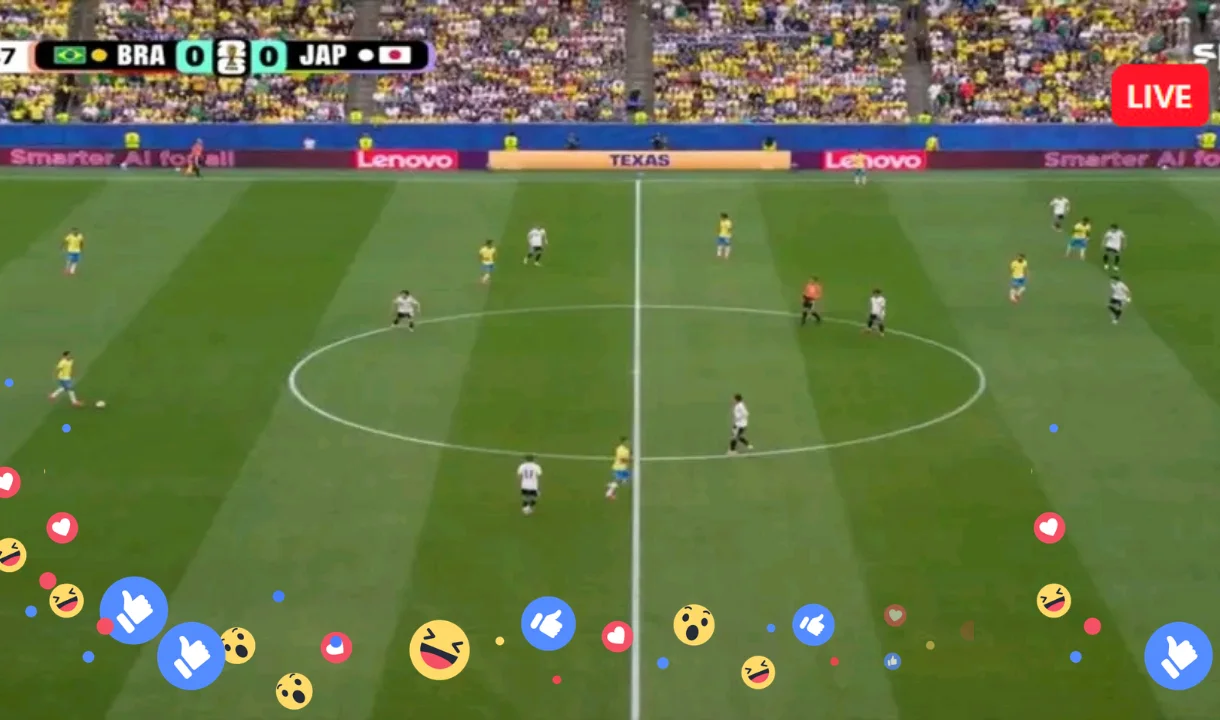
Brazil will meet Japan in a high-stakes World Cup round-of-32 tie on Monday, June 29, 2026, with Brazil coming in as group winners and Japan advancing as runners-up from Group F. The game is scheduled for 6:00 pm BST, which is 10:30 pm IST, at NRG Stadium in Houston.
The Houston forecast points to hot, humid conditions around kickoff, with temperatures near 93-94 F, only a small rain chance, and moderate wind. The roof at NRG Stadium is expected to stay closed, which should reduce weather disruption but keep the playing environment warm and heavy, especially for pressing teams.
That kind of atmosphere usually favors the side with more control in possession and deeper squad freshness, because the pace can drop in the second half, and recovery runs become more demanding. It also raises the value of set pieces, transitions, and efficient finishing.
This is a knockout match, so there is no margin for error: one poor spell, one defensive lapse, or one moment of brilliance can decide the tie. Brazil topped Group C, while Japan finished second in Group F, which gives the Seleção a reputation advantage but also adds pressure because Brazil are expected to advance.
Brazil’s recent scoring output has been strong, while Japan arrives with confidence after pushing through a tricky group and showing they can stay competitive against well-organized opponents. The result makes this one of the more intriguing round-of-32 matchups because it combines Brazil’s attacking quality with Japan’s compact structure and discipline.
FIFF World Cup Match details
-
Match: Brazil vs Japan.
-
Competition: FIFA World Cup 2026, Round of 32.
-
Date: Monday, June 29, 2026.
-
Kick-off time: 6:00 pm BST / 10:30 pm IST.
-
Venue: NRG Stadium, Houston.
FIFA World Cup 2026 Live Streaming Info
The FIFA World Cup 2026 will be hosted by the United States, Canada, and Mexico, with the opening match set for 11 June 2026 at Estadio Azteca in Mexico City and the final on 19 July 2026 in New York/New Jersey.
The FIFA World Cup 2026 (June 11–July 19, 2026) is live-streamed worldwide across 48 teams and 104 matches hosted by the US, Mexico, and Canada. Here’s your complete global guide:
Live Streaming Info:
Will be live on Bein Sports 5
Live Score Info:
FIFA World Cup 2026: All matches on FlashScore have live scores.
Free Streaming Platform Guide for FIFA (World Cup 2026)
United States Free Options
In the US, you have three main free choices. FOX One and FOXSports.com stream all 104 World Cup matches live with full English coverage on FOX/FS1, though you typically need a cable login. For truly free access, Tubi offers a free simulcast of the opening ceremony plus the first two opening matches in 4K quality, including the US opener. FIFA+ also provides limited free matches, but it won’t cover the full tournament, so you might miss this specific Türkiye vs Paraguay game there.
UK & Ireland Free Coverage
British and Irish fans have the best free streaming deal. BBC iPlayer and ITVX in the UK stream all 104 matches completely free with just a TV license—no subscription needed. In Ireland, RTE and Virgin Media Player provide full tournament coverage free as well. Both platforms work on smart TVs, phones, tablets, Chromecast, and Apple TV.
Australia’s Exclusive Free Option
Australian viewers get all 104 matches live and free exclusively through SBS On Demand. This is the only platform with complete tournament coverage in Australia, and it’s completely free with no cable login required. You can watch on any compatible device including smart TVs and mobile phones.
Canada Streaming Platforms
Canadian fans can access the tournament through TSN, CTV, and RDS. TSN airs all 104 matches, CTV covers prime-time marquee games, and RDS provides French-language coverage. Some content requires a TSN subscription, but CTV offers free prime-time matches.
Europe and Latin America
Spain fans can watch most games free through RTVE Play. In Mexico, Fox Sports México and TUDN provide full tournament coverage, though you may need a cable subscription depending on your provider.
Predicted lineups
Brazil probable XI: Alisson, Danilo, Marquinhos, Gabriel Magalhães, Douglas Santos, Casemiro, Bruno Guimarães, Lucas Paquetá, Rayan, Matheus Cunha, Vinícius Júnior.
Japan probable XI: Zion Suzuki, Hiroki Ito, Ko Itakura, Ayumu Seko, Yukinari Sugawara, Daichi Kamada, Ao Tanaka, Ritsu Doan, Keito Nakamura, Ayase Ueda, Daizen Maeda.
Head-to-head record
Brazil and Japan have met 14 times in official and friendly matches. Brazil leads the overall series with 11 wins, Japan has 1 win, and there have been 2 draws.
Last five meetings:
-
Japan 3-2 Brazil, October 14, 2025.
-
Brazil 1-0 Japan, June 6, 2022.
-
Japan 1-3 Brazil, November 10, 2017.
-
Japan 0-4 Brazil, October 14, 2014.[
-
Brazil 3-0 Japan, June 15, 2013.
That 2025 result is important because it reminds both teams that the historical gap is real, but not impossible to challenge. Japan’s win should also give them the belief that they can hurt Brazil if they stay compact and take their chances.
Brazil analysis
Brazil have looked sharp in the tournament, and their recent form suggests they are generating goals with more freedom than in some earlier cycles. Their last reported starting XI against Scotland featured Alisson, Danilo, Gabriel Magalhães, Marquinhos, Douglas Santos, Casemiro, Lucas Paquetá, Bruno Guimarães, Rayan, Matheus Cunha, and Vinícius Júnior.
Their biggest strength is individual quality in the final third, especially with Vinícius Júnior’s pace and 1v1 threat. Brazil can also control games through Casemiro and Bruno Guimarães, then accelerate quickly once space opens up.
The main concern is whether their full-backs and midfield balance can withstand Japan’s movement between the lines, especially if the game becomes stretched. Raphinha is reported as doubtful with a hamstring issue, which could slightly reduce Brazil’s right-sided threat and force another adjustment in the attacking front line.
Expected approach: Brazil should look to dominate possession, pin Japan back with width, and use Vinícius to attack the space behind the defensive line. If they score first, they can make the game much easier by forcing Japan out of their compact shape.
Japan analysis
Japan have shown they can compete in a disciplined, structured way, and their recent group-stage form was enough to earn this knockout place. Their last reported XI against Sweden included Zion Suzuki, Ayumu Seko, Ko Itakura, Hiroki Ito, Yukinari Sugawara, Daichi Kamada, Ao Tanaka, Keito Nakamura, Ritsu Doan, Ayase Ueda, and Daizen Maeda.
Japan’s strength is their collective organization, quick combination play, and ability to recover shape after losing the ball. They also carry genuine attacking threat through Doan, Kamada, and Ueda, which means Brazil cannot simply assume control without defending transitions carefully.
Their weakness against elite opposition is that they can be forced deeper for long stretches, which limits their chance creation and places more pressure on their back line. Takefusa Kubo is listed as doubtful with a knee issue, while Ko Itakura is also a doubt, which would matter because both players are important to Japan’s technical and defensive balance.
Expected approach: Japan are likely to stay compact, press selectively, and look for fast breaks or overloads down the channels. They will need high efficiency in the final third because they are unlikely to enjoy long spells of territorial dominance.
Tactical battles
The biggest tactical battle is Brazil’s wide attacking quality versus Japan’s defensive spacing. If Brazil can isolate full-backs and create 1v1s for Vinícius or runners from midfield, they should generate enough chances to win.
Japan will try to slow the tempo, deny central access, and force Brazil into lower-value crossing situations. The other major duel is in midfield, where Brazil’s physical control and Japan’s mobility will decide who dictates the rhythm.
Set pieces could also matter because knockout games in humid conditions often become more fragmented and more reliant on dead-ball moments. That slightly narrows the gap and gives Japan a path if they can keep the score level deep into the match.
Team trends
Brazil have been productive in front of goal, with recent reports highlighting 15 goals across five matches, which points to strong attacking momentum. Japan, meanwhile, have been more balanced and less explosive, but their structure has kept them in games and allowed them to progress.
Brazil’s group-stage status shows control and quality, while Japan’s position as Group F runners-up suggests they are comfortable in close contests. The numbers point to Brazil having the higher ceiling, but Japan’s discipline makes them dangerous if the game stays tight.
Players to watch
Vinícius Júnior is Brazil’s decisive weapon because he can turn a tight knockout match with one burst, one dribble, or one run behind the defense. Casemiro is equally important because Brazil need him to protect transitions and keep Japan from breaking through centrally.
For Japan, Ritsu Doan and Daichi Kamada are key because they can connect midfield to attack and exploit any hesitation in Brazil’s rest defense. Ayase Ueda is the player most likely to punish Brazil if the match becomes open or if set pieces create chaos.
Brazil should have more of the ball and more individual match-winners, but Japan are organized enough to make this competitive. The combination of Brazil’s attacking depth and Japan’s resilience points toward a narrow Brazil win, most likely 2-1, with the possibility of extra time if Japan keep the game level into the final half-hour.