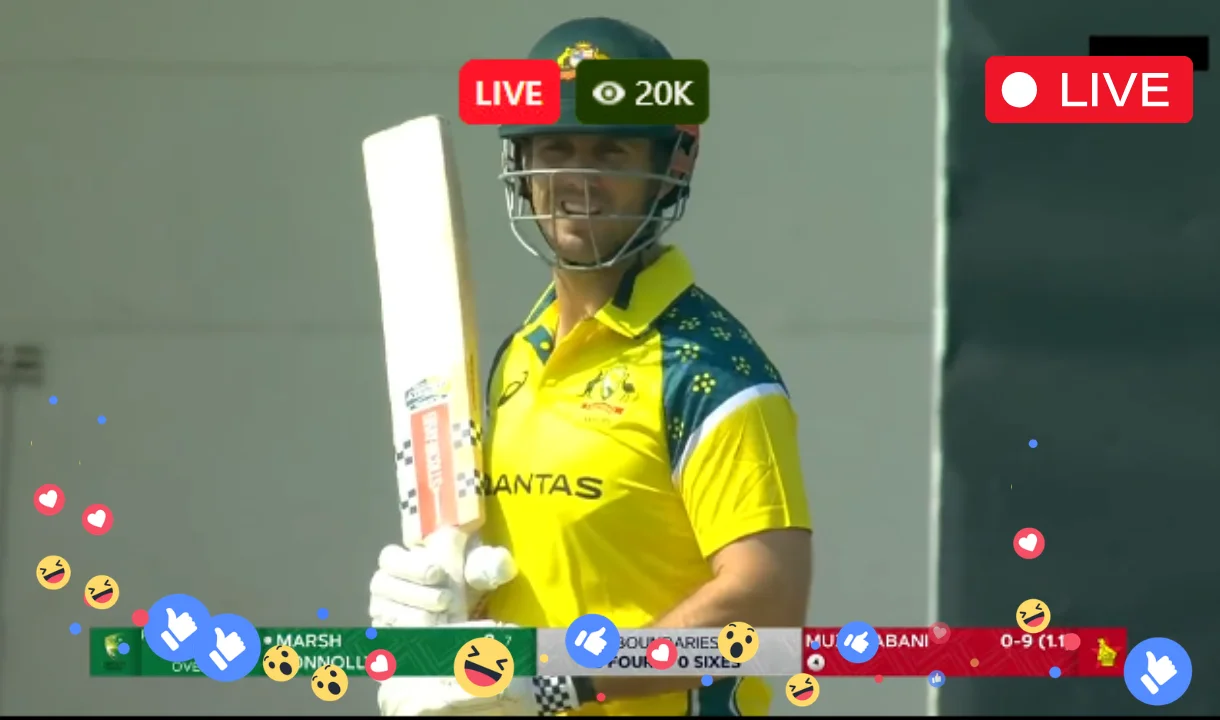
Zimbabwe vs Australia, 1st ODI Match Zimbabwe will host Australia in the opening match of a three-game ODI series at Harare Sports Club on Tuesday, September 15. The contest is important for both teams as they continue preparations for the 2027 ODI World Cup, but Australia arrive with greater depth while Zimbabwe will rely heavily on home conditions, spin and the experience of Sikandar Raza.
All three matches will be played at Harare Sports Club, with the second ODI scheduled for September 18 and the third on September 20. The series is Australia’s first ODI visit to Zimbabwe since 2014 and the teams’ first bilateral ODI meeting since Australia’s 2022 tour.
This series gives both sides valuable preparation in conditions similar to those expected during the 2027 World Cup in southern Africa. Australia have several selection questions to answer after the retirements of Steve Smith, Glenn Maxwell and Marcus Stoinis, while regular captain Pat Cummins and Mitchell Starc are not part of the Zimbabwe leg.
Mitchell Marsh will lead Australia, with Travis Head, Josh Hazlewood, Cameron Green and Adam Zampa providing considerable international experience. Younger players such as Cooper Connolly, Josh Inglis, Xavier Bartlett and Oliver Peake also have an opportunity to strengthen their claims for World Cup selection.
For Zimbabwe, the series is a chance to build on their recent home success against Bangladesh and their memorable victory over Australia at the 2026 T20 World Cup. Sikandar Raza has taken over as captain after Richard Ngarava was ruled out with a lower-back injury. The hosts have also recalled veteran batter-wicketkeeper Brendan Taylor and legspinner Graeme Cremer.
AUS vs ZIM Match Details
- Match: Zimbabwe vs Australia, 1st ODI
- Date: Tuesday, 15 September 2026
- Venue: Harare Sports Club, Harare
- Start time: 9:30 AM Zimbabwe time
AUS vs ZIM 2026 Live Streaming Info
Live Streaming Info:
The Aus vs ZIM 2026 will be live on
Cricgo HD will be live.
Live Score Info:
Australia vs. Zimbabwe 1st ODI Match: ESPN and Cricbuzz have live scores.
Recent Form and Momentum
Zimbabwe’s recent ODI record has been inconsistent, but they won their latest bilateral series 2-1 against Bangladesh in July. The Chevrons have played only a small number of ODIs in 2026, and all of those matches were held in Harare. That familiarity with the ground could be important, particularly for their slower bowlers and middle-order batters.
Brad Evans was Zimbabwe’s leading performer against Bangladesh, scoring two half-centuries and taking five wickets across the series. Ben Curran also made a century during the contest, although run-scoring was generally difficult on the Harare surfaces. Zimbabwe’s recent form guide has been mixed, but their confidence is higher after beating Bangladesh, the same opponent that defeated Australia in a recent ODI series.
Australia have also experienced an uneven period. They lost their last two ODI series 2-1 against Bangladesh and Pakistan, although those campaigns involved experimentation and a weakened lineup. Before those defeats, Australia won a home series against India 2-1. Their overall ODI quality remains high, but the absence of several senior players means the middle order and pace attack will be closely watched.
Head-to-Head Record
Zimbabwe and Australia have met 33 times in ODIs. Australia have won 29 matches, Zimbabwe have won 3, and one match ended without a result.
The last five meetings were:
The overall record strongly favours Australia, but the most recent meeting ended in a Zimbabwe victory. That result, combined with Zimbabwe’s T20 World Cup upset, gives the hosts belief that Australia can be challenged despite the historical gap between the teams.
The Harare Sports Club pitch usually offers a balanced contest, although batting can become increasingly difficult as the innings develops. The new ball may move slightly in the morning, giving Australia’s seamers and Blessing Muzarabani an opportunity to attack the top order.
Once the surface dries, spinners and bowlers who vary their pace should become more effective. Adam Zampa could play a major role for Australia, while Sikandar Raza, Graeme Cremer, Ryan Burl and Wellington Masakadza give Zimbabwe several spin options.
Historical ground data places the average first-innings ODI score in the region of 225 to 230, although conditions and team quality can produce much higher totals. A score around 250 may be competitive, while a team batting first should ideally aim for 270 or more if the surface remains good.
The toss could influence the match. Captains may prefer to bowl first if there is early movement, but batting first could also be attractive if the pitch slows during the second innings.
The forecast for Harare is expected to be generally favourable for cricket, with clear or partly cloudy conditions and a low risk of rain. Temperatures should remain comfortable during the morning start before becoming warmer in the afternoon. Light winds are unlikely to cause a major interruption.
Because the match begins at 9:30 AM local time, the first hour could be the coolest and most helpful period for fast bowlers. Humidity may offer a small amount of assistance with swing, but the overall weather outlook suggests a full match is likely. Weather information can change, so teams and viewers should check the final forecast on match morning.
Zimbabwe Team Analysis
Zimbabwe’s biggest strength is their familiarity with Harare conditions. Their lineup contains several players capable of contributing in multiple disciplines, led by Raza, one of the country’s most experienced all-rounders. Brian Bennett has become an important top-order batter, while Ben Curran provides another dependable run-scoring option.
The return of Brendan Taylor adds experience and leadership to the batting group, although his lack of recent ODI cricket could be a concern. Craig Ervine is expected to provide stability in the middle order, and Brad Evans offers useful balance after his strong performances against Bangladesh.
Muzarabani is the main threat with the ball. His height, bounce and ability to extract movement make him particularly dangerous against unfamiliar batters. Cremer’s return adds variety, but Zimbabwe’s weakness is the relative lack of depth compared with Australia. If the top order collapses or Raza is dismissed early, the hosts may struggle to maintain pressure for 50 overs.
Probable XI: Ben Curran, Brian Bennett, Innocent Kaia, Craig Ervine, Brendan Taylor, Sikandar Raza, Ryan Burl, Brad Evans, Graeme Cremer, Newman Nyamhuri, Blessing Muzarabani.
Australia Team Analysis
Australia have the stronger squad on paper. Travis Head can change the game during the powerplay, while Mitchell Marsh offers both leadership and explosive batting. Cameron Green brings balance, and Cooper Connolly is one of the most interesting players in the squad after scoring a match-winning 149 against Bangladesh in his most recent ODI.
Josh Inglis and Alex Carey provide wicketkeeping options, while Matt Renshaw and Oliver Peake add middle-order competition. With Hazlewood leading the attack, Australia have a world-class new-ball bowler, and Nathan Ellis, Spencer Johnson and Xavier Bartlett provide different pace variations.
Zampa is likely to be Australia’s most important bowler if the pitch turns or slows. The main concern is that the team’s middle order is still developing. Australia no longer have the accumulated experience of Smith, Maxwell and Stoinis, while Connolly’s workload remains a consideration after his recent back issue.
Probable XI: Travis Head, Mitchell Marsh, Cooper Connolly, Josh Inglis, Cameron Green, Matt Renshaw, Alex Carey, Xavier Bartlett, Nathan Ellis, Adam Zampa, Josh Hazlewood.
Key Players to Watch
Sikandar Raza: Zimbabwe’s captain is central to both their batting and bowling plans. His ability to control the middle overs and handle pressure could determine whether Zimbabwe can compete with Australia.
Blessing Muzarabani: The tall fast bowler will be expected to strike with the new ball and return at the death. He took four wickets against Australia in Zimbabwe’s T20 World Cup victory earlier in 2026.
Travis Head: Head’s aggressive approach can neutralise Zimbabwe’s new-ball attack quickly. If he survives the opening spell, Australia could establish control early.
Adam Zampa: The legspinner could be decisive on a surface expected to slow down. Zimbabwe’s middle order will need to rotate the strike carefully against him.
Australia should start as favourites because of their superior squad depth, stronger bowling resources and long-standing dominance in this fixture. Hazlewood, Zampa, Head and Marsh give them match-winners in every department.
Zimbabwe can make the contest close if Muzarabani takes early wickets and Raza controls the middle overs. Their recent home success and knowledge of the Harare pitch should not be dismissed, but Australia appear better equipped to handle a low-scoring or tactical ODI.
Australia to win the 1st ODI, although Zimbabwe are capable of forcing a competitive finish if they bat first and post around 260 or more.